

When I first started rethinking our laundry products I was excited by laundry sheets. The packaging was minimal, they arrived by post, and they were so tidy and easy to store. But after sharing about them in a Sustainability Sunday post, I had some really thoughtful comments that made me dig deeper.
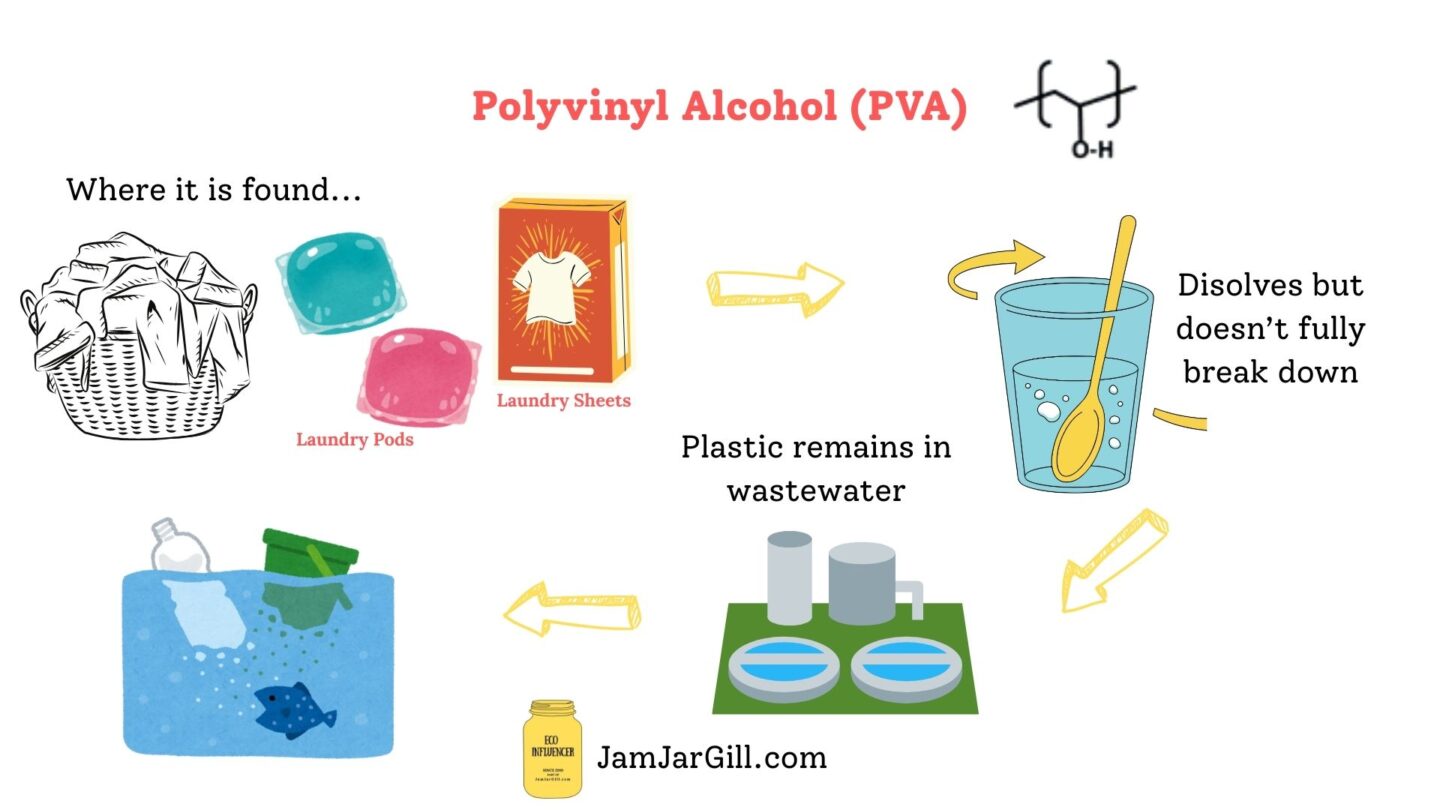
Turns out, many laundry sheets contain PVA, a type of plastic that does dissolve in water, but doesn’t always break down fully. Some of it still ends up in our water systems. That was a turning point for me, and honestly, it made me stop using laundry sheets altogether.
What Is PVA and Why Is It Used?
PVA stands for polyvinyl alcohol, a synthetic material used in laundry sheets and pods. It’s water-soluble, which makes it feel eco-friendly. Brands often use terms like plastic free and biodegradable, but they usually mean the outer packaging is plastic free, not the product itself.
The issue is that dissolving doesn’t mean disappearing. Just because something breaks up in water doesn’t mean it’s harmless. PVA is still a plastic, and how it behaves in real wastewater systems is a big question.
What the Science Shows
Here’s what recent UK and international reports say:
- A report by Beyond Plastics shows that PVA doesn’t always fully biodegrade. Even after dissolving, it can leave behind microplastics that slip through wastewater treatment and into nature.
- Ethical Consumer, a UK-based group, reviewed many laundry brands and flagged greenwashing. They explain that some biodegradable claims only apply in lab tests, not in real home washing or UK sewage systems.
- Sustainably Lazy, a UK eco blog, points out that PVA often needs ideal conditions, like the right temperature and specific microbes, to fully break down. Those conditions are not always found in water treatment plants.
Why This Matters
1. Water Pollution
If PVA lingers in the environment, it can act like microplastic pollution, harming aquatic life and building up over time.
2. Greenwashing
Plastic free and biodegradable are words that feel good but can be used in misleading ways. Real transparency matters.
3. Ongoing Impact
Making a good swap once is great, but real conscious consumerism means checking in regularly. Every time something runs out, there’s a chance to see if a better alternative has been developed.
What I Do Now
When I stopped using laundry sheets, I switched to bulk buy and refillable laundry liquid. It works well for us, cuts down on plastic, and doesn’t come with the greenwashing guilt.
But I also know that being a conscious shopper isn’t about getting it right once. It’s about staying curious. For example, I recently found that laundry blocks are becoming more widely available in the UK. They’re another interesting low-waste alternative. The key thing isn’t always the upfront cost, it’s the cost per wash, and both laundry blocks and refillable liquids can work out at around 19p per wash, which I think is pretty reasonable.
Dealing With Whites and Making Clothes Last
I know there’s a whole separate struggle when it comes to keeping clothes white. It’s something many people worry about, especially for school uniforms or workwear. And I get it, that’s one area where making ethical laundry swaps can feel trickier.
But when whites aren’t essential, I’ve found an old-school trick that I love. I use Dylon machine dyes to re-dye lighter or stained clothes darker instead of replacing them. It’s such a satisfying way to give clothes a second life, and it’s something people have done for generations. It’s not only low waste, it’s joyful too.
Simple Questions to Ask
- Does it contain PVA or polyvinyl alcohol?
- Is the biodegradability tested in real-world conditions?
- Can I refill it or reuse the container?
- Does it help my clothes last longer, not just get clean?
Final Thoughts
Laundry sheets can seem like the perfect eco swap. But as I’ve learned, the details really matter. PVA is a dissolvable plastic, but it doesn’t always disappear, and that means it’s not as green as it seems.
Making one good choice is a great start. But true sustainability means coming back to those choices again and again, asking what’s changed, and what’s improved. That’s conscious consumerism, not just swapping, but staying curious.
I’ve got it wrong before, and I will again. But I love learning and sharing as I go. If it helps someone else make a slightly better choice next time, that feels like a win to me.
Want to Go Further?
Join the Community
Sign up here for holistic health insights, podcast episodes, and eco-friendly ideas delivered straight to your inbox. No spam, just thoughtful tips and inspiration to support your sustainable lifestyle.
Work With Me
- Submit a Sustainable Guest Post and share your voice with my audience. Every post includes a UK tree planted in your name.
- Get in Touch to:
- Collaborate on eco-living blog posts or ethical product testing
- Become a sponsor or guest on my holistic health podcast
- Explore creative business services like socials, emails, and podcast support
- Book a virtual cuppa and chat through your project or idea
Let’s create something meaningful, together.